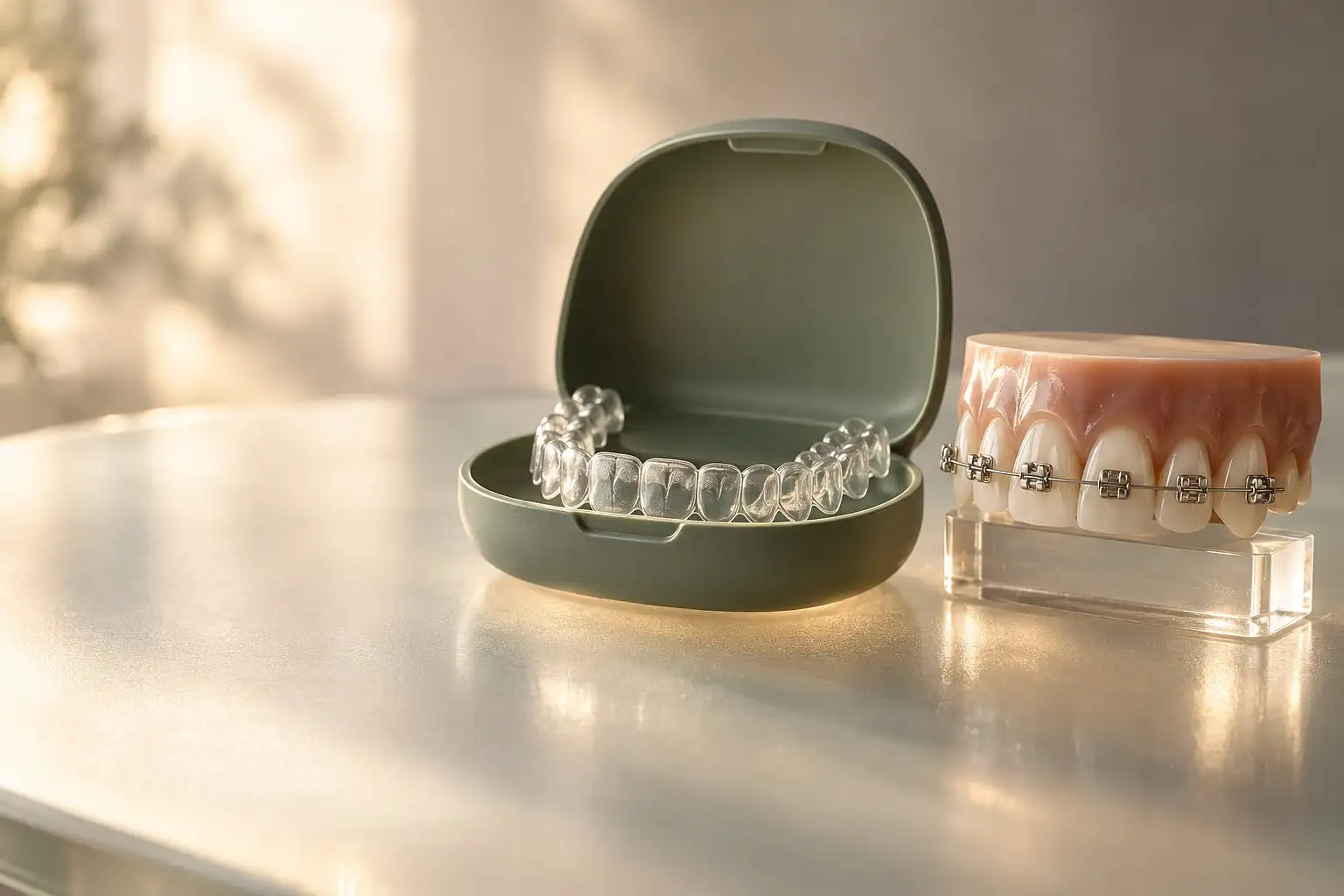


If you already know clear aligners interest you, the next step is imagining what the treatment is like: what happens first, how many hours they are worn and what happens at the end. Here we walk through it phase by phase. If you are still comparing options, first read clear aligners or braces.
In brief
- Aligners are custom-made, clear plastic trays that move the teeth little by little with gentle pressure.
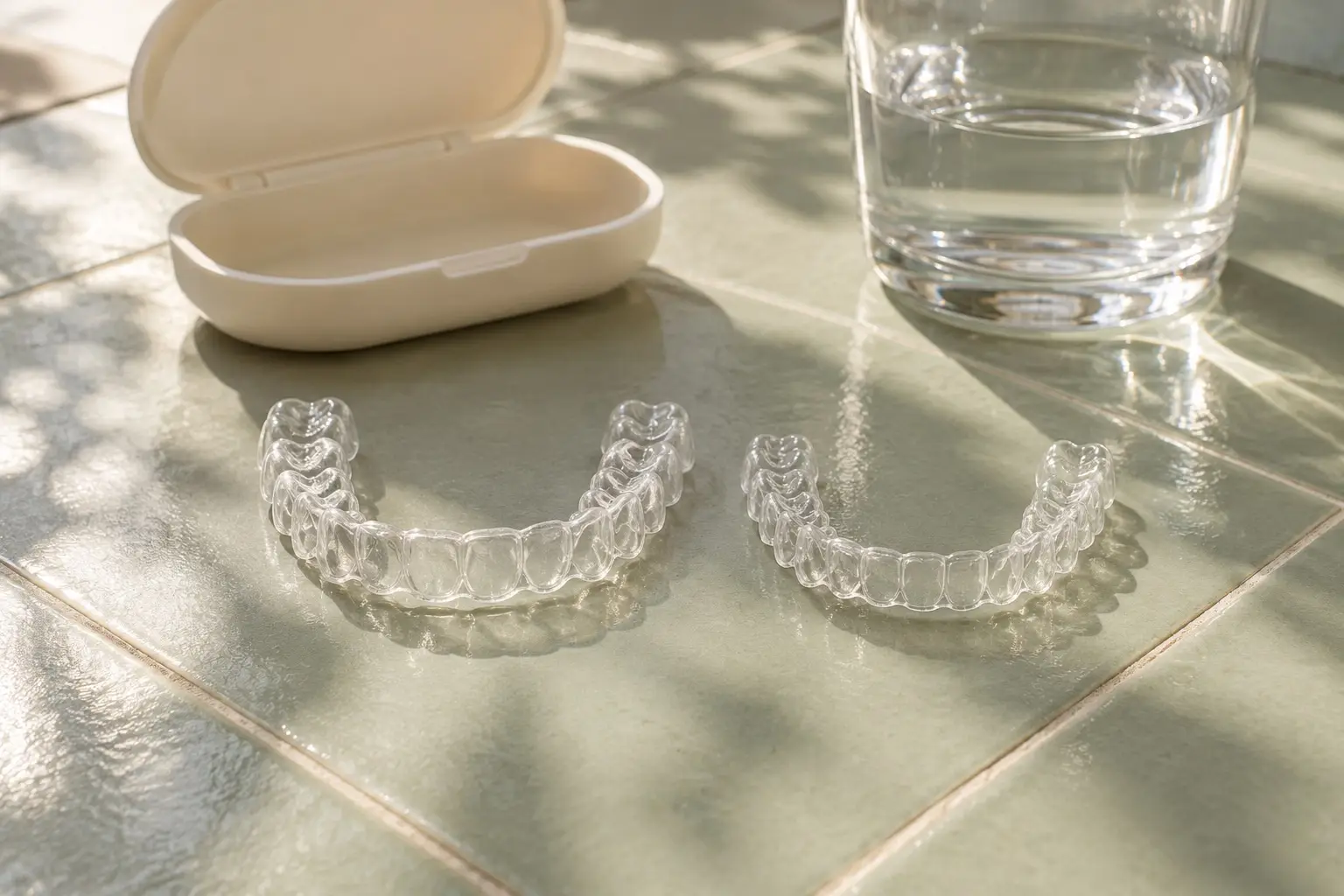
- According to the AAO, each set is worn for about a week, at least 22 hours a day, and is taken out only to eat, drink and clean your teeth.
- The number of sets and the duration depend on your case, and check-ups let you confirm that the teeth are moving as planned.
- At the end, a retainer helps the teeth stay in their new position.
What happens before you start?
Before treatment there is an assessment. Your dentist examines your mouth and decides whether aligners are an option for you. The AAO reminds us that they are not suitable for everyone: depending on the case, aligners, braces or a combination may be recommended.
It is also a good idea to get your mouth in order. The AAO suggests having a cleaning and an exam beforehand, and finishing any pending treatment before the records are taken, because aligners are made to the exact shape of your teeth.
Those records are made with a scan of your teeth. At Nümia we take records with an intraoral scanner. With that scan, the movement is planned and the sets of aligners are made.
How do aligners work month by month?
They work in stages, with a series of sets in which each one moves the teeth a fraction of a millimeter. These are the usual phases:
- Delivery. You receive your first aligners and are shown how to put them in, take them out and care for them. Attachments may be placed; these are small, tooth-colored bumps that help move the teeth while you wear the aligner. They are removed when treatment ends.
- Adjustment. The AAO speaks of about seven days to get used to them, with mild discomfort the first few days. It is temporary.
- Changing sets. You move on to the next aligner at the pace your dentist indicates.
- Check-ups. Control appointments are recommended throughout the treatment to confirm that the teeth are moving as planned and to take care of any detail.
The duration depends on your case: on the number of sets and the movements needed.
How many hours a day do they have to be worn?
They have to be worn at least 22 hours a day, according to the AAO. They come out only to eat, drink, brush and floss.
Some ideas to make it work:
- Always carry the case with you, so the aligner does not end up wrapped in a napkin.
- Brush and floss before putting them back in.
- Set reminders if you find it hard to remember.
If a set does not fit well or breaks, tell your dentist instead of moving on to the next one on your own.
What happens when treatment ends?
When the teeth reach their position, retention follows. A retainer is a fixed or removable appliance worn after the aligners to keep the teeth in their final position. According to the AAO, wearing it as directed is what helps reduce unwanted movement after treatment.
There are removable retainers, made of clear plastic or of wire with hard plastic, and fixed retainers. Your dentist will explain which one suits your case and how long to wear it.
When to see us
You should talk with your dentist if:
- An aligner hurts you, cracks or does not fit well.
- Discomfort continues after the first week with each new set.
- You lost or broke an aligner or a retainer.
- An attachment came off.
If you want to know whether aligners are an option for you, in Orthodontics we evaluate your case before proposing a treatment. And if you would rather first see how we work, here is your first visit.