

Crown, bridge, denture: the three words sound alike and are easy to mix up. Each one solves a different problem, and knowing which is which helps you understand what your dentist proposes and why.
In brief
- A crown covers a tooth you already have to restore its shape and size.
- A bridge replaces one or more missing teeth, anchored to the neighboring teeth or to implants.
- A removable denture replaces several teeth, or all of them, and you can take it out to clean it.
- Which one suits you depends on your case, and the assessment with your dentist decides it.
What is a crown, and when is it used?
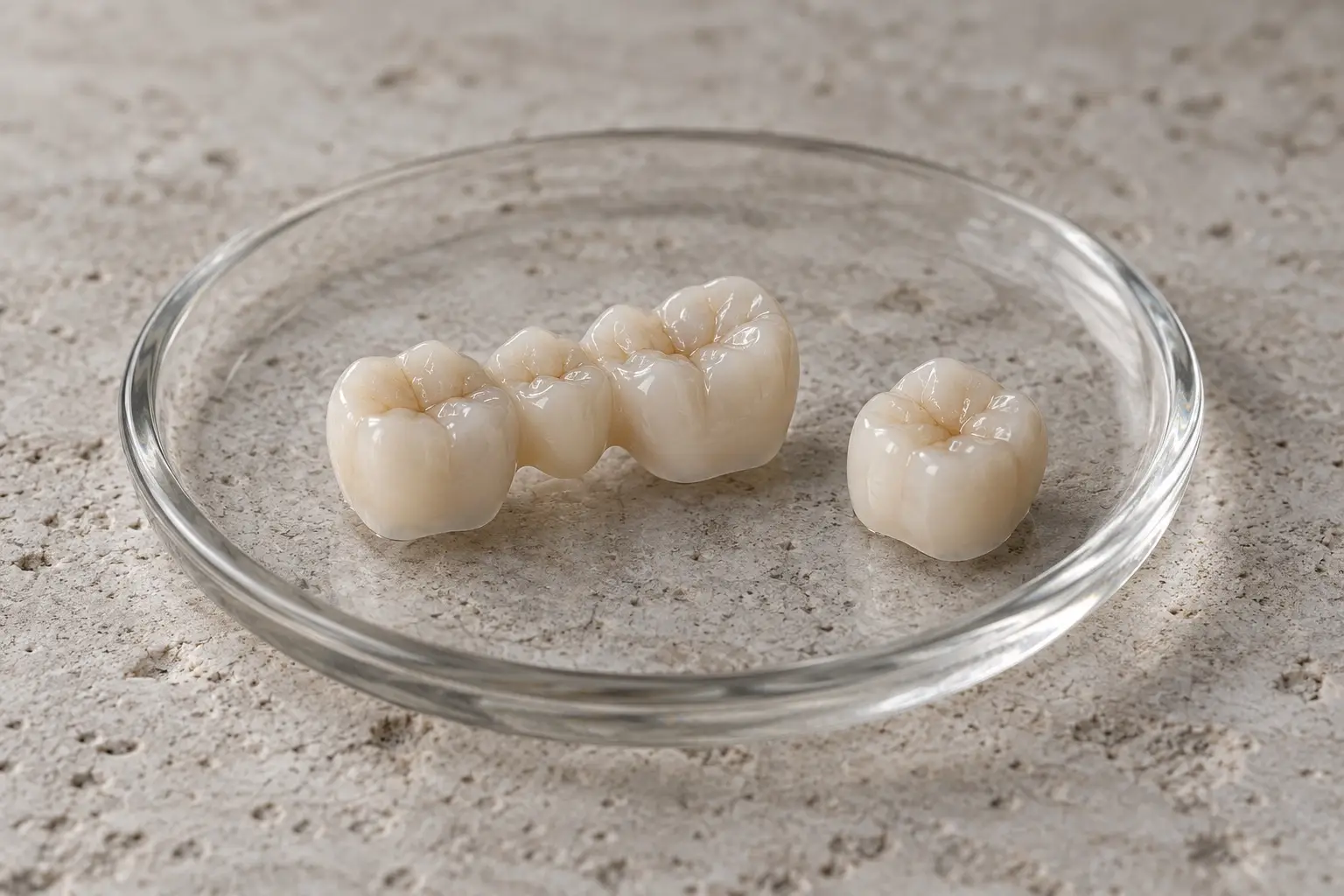
A crown is a cover placed over a tooth to restore its normal shape and size, and it can make the tooth stronger and improve its appearance. According to the ADA, it is used, for example, to:
- support a tooth with a large filling when little natural structure is left;
- protect a weak tooth from fracturing, or restore one that has already broken;
- cover teeth with altered color or shape;
- hold a bridge in place;
- cover a dental implant.
At Nümia, crowns are made with an intraoral scanner and a digital workflow. If the digital side interests you, ask about it at your assessment.
What is a dental bridge?
A bridge is a fixed prosthesis that replaces one or more missing teeth with artificial teeth. It is attached to the surrounding teeth, which serve as its support, and only your dentist can remove it. It can be made of gold, alloys, porcelain or a combination of them.
Losing a tooth can affect chewing and speech, and a bridge aims to restore both. Since it depends on its support base, whether teeth or implants, keeping your remaining teeth healthy and strong is important for it to work.
What is a removable denture?
A removable denture is an appliance that replaces missing teeth and that you can take out and put back in. There are two main forms:
- Partial: it has artificial teeth on a gum-colored base and rests on your natural teeth, with clasps or other connectors. Sometimes crowns on natural teeth are needed for a better fit.
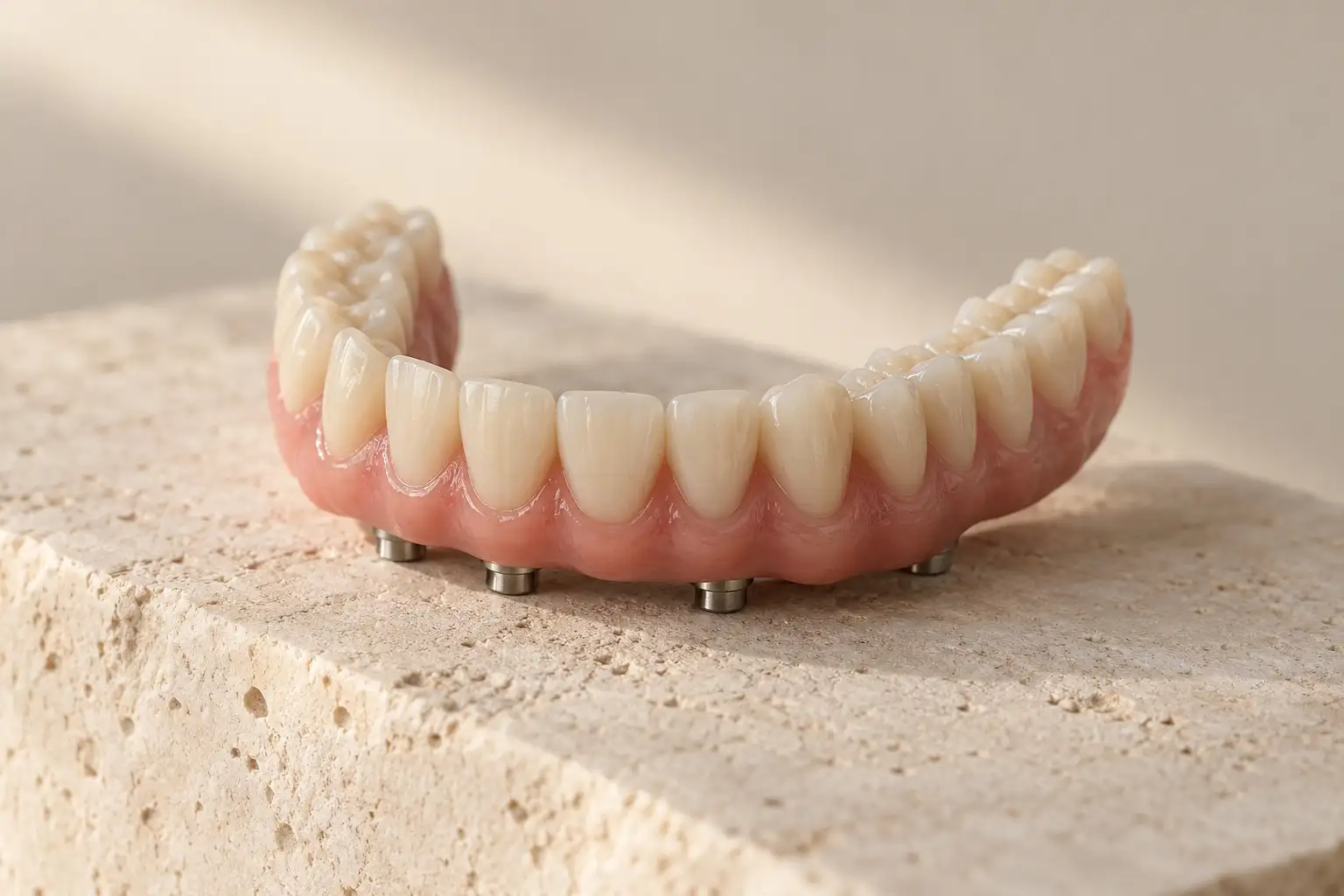
- Complete: it replaces all the teeth in an arch. The conventional one is placed once the remaining teeth have been removed and the gums have healed; the immediate one is placed the same day as the extraction and may need adjustments as the jaw heals.
And what if implants are involved?
Implants can support the final restoration. With a single tooth, the dentist makes a custom crown; with several, bridges or dentures are made to fit your mouth and the implants. There is also the overdenture, a denture that fits over implants or over prepared natural teeth and gives more stability. For the phases and timing of an implant, read Dental implants and travel.
How do you care for them?
Care changes depending on what you have:
- Crown and bridge: you brush and clean them like your own teeth, including the area where they meet the gum. Your dentist will explain how to clean under the bridge.
- Removable denture: clean it daily with a soft brush and mild soap, never with toothpaste, because it is abrasive. At night, keep it moist so it does not lose its shape.
- If it loosens or breaks, do not repair it at home with glues: see your dentist.
- Over time, the mouth changes and a denture may need adjustments. That is why checkups matter.
How long each restoration lasts depends on the care you give it and on your case, so nobody can promise you a time frame.
When to see us
- One or more teeth are missing and you find it hard to chew or speak clearly.
- A tooth is broken, badly worn or has a large filling that worries you.
- A crown, bridge or denture has shifted, loosened or hurts.
- You notice irritation or pain in an area where you wear a denture.
If you want to understand which option fits you, Prosthodontics is the specialty that replaces and restores teeth, and it works hand in hand with Dental implants. At Nümia, we assess your case before proposing a treatment.