

If you live far away and are thinking about getting an implant during a trip to Playa del Carmen, the key question is how much time you need. The short answer: an implant does not happen in a single visit, because the bone needs time to heal. Here we explain how the phases are spread out so you can plan calmly.
In brief
- An implant has three phases: placement, bone healing and crown placement.
- The bone takes time to integrate with the implant: in general, up to several months, and that depends on each case.
- That is why many people need more than one trip; your dentist will tell you how many, based on your assessment.
- Between trips, it matters to look after the area and to have a trusted dentist near home.
Why does an implant usually take more than one trip?
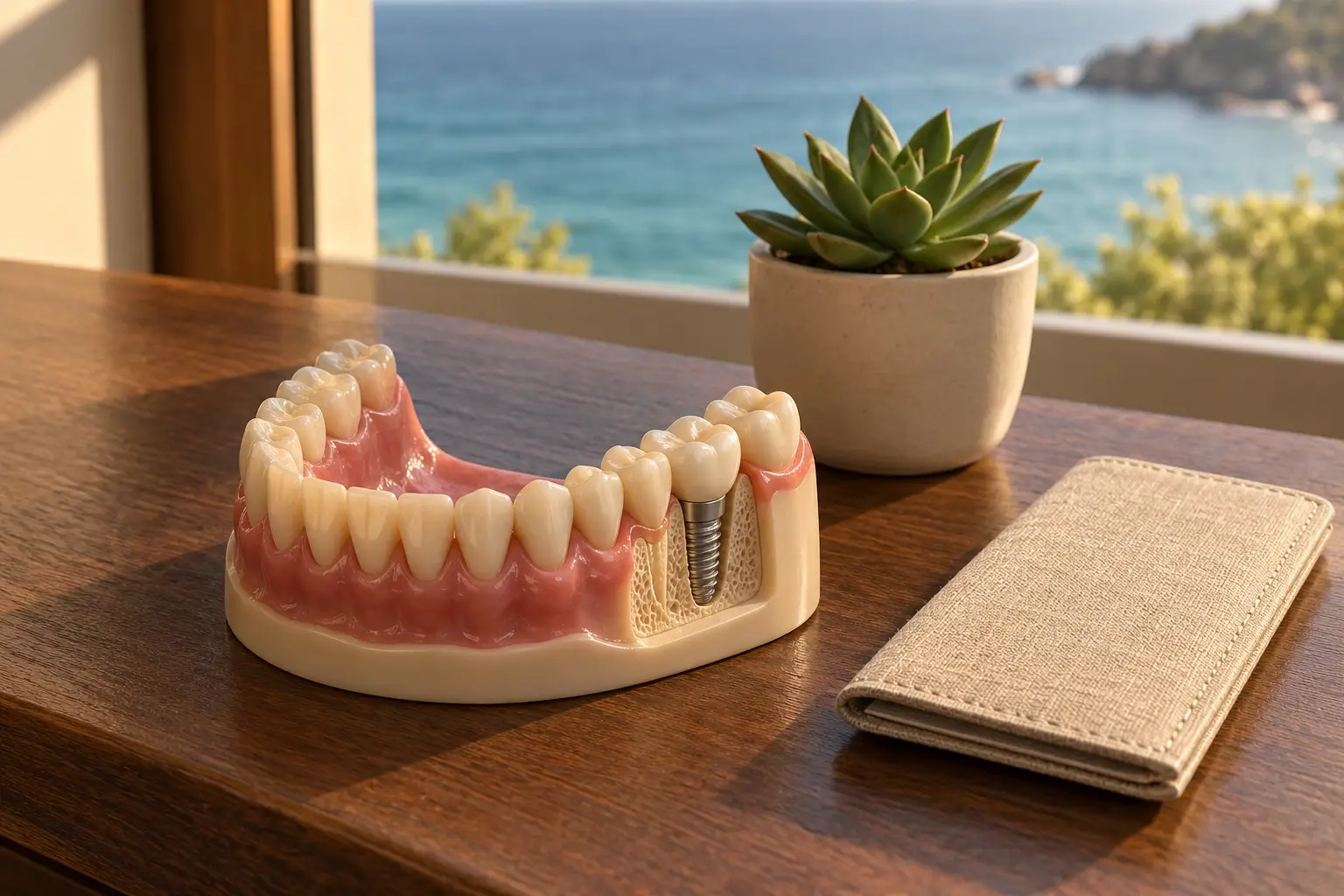
Because the part that holds the implant is your own bone, and bone heals slowly. According to the ADA, there are generally three phases:
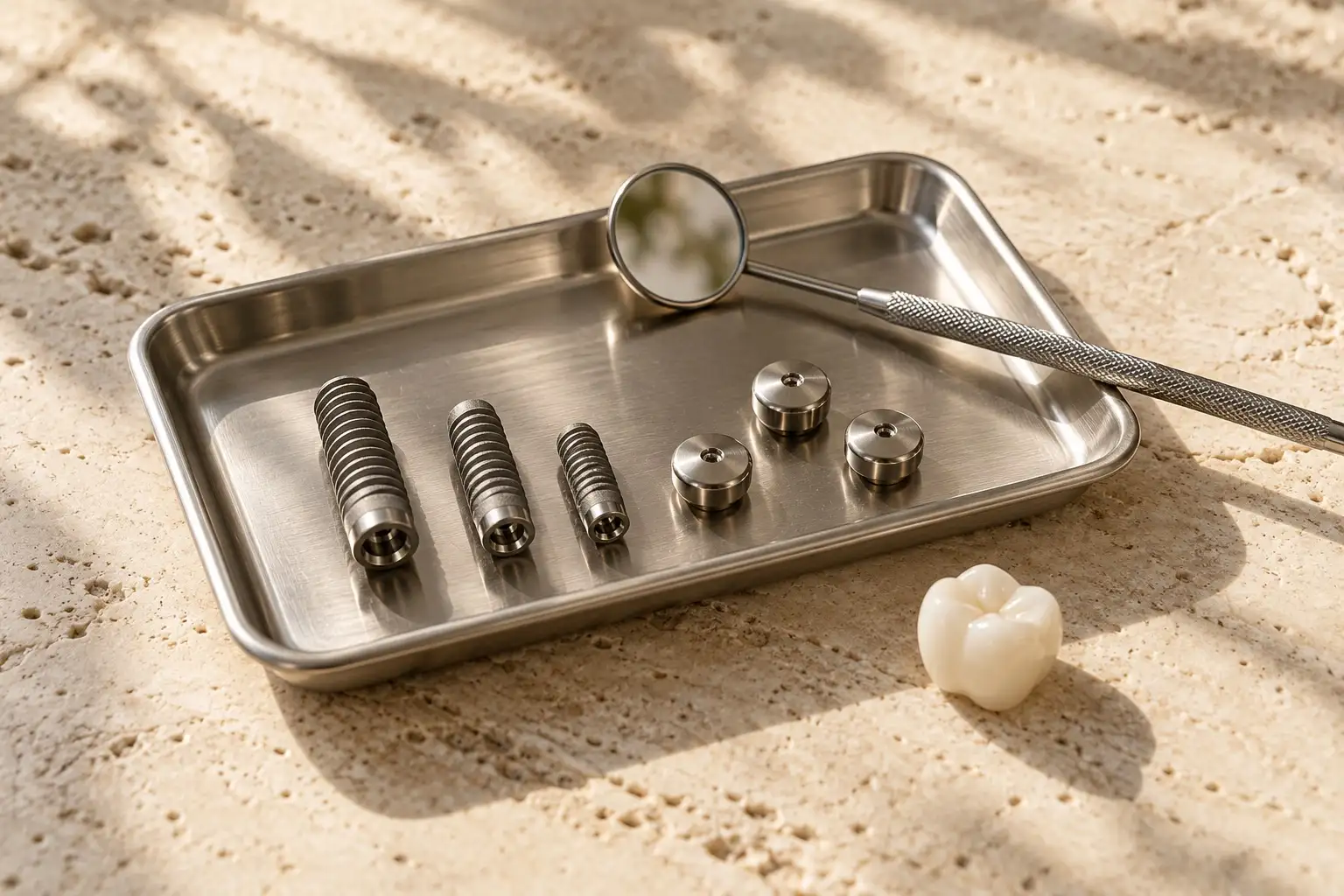
- Placement: the dentist places the implant in the jawbone through a surgical procedure.
- Healing: the bone grows around the implant and holds it. This process is called osseointegration and it takes time.
- Crown: once the implant is firm, the artificial tooth is placed, customized in size, shape and color so it resembles your other teeth.
Sometimes you have to wait for the implant to integrate completely, up to several months, before the replacement teeth are placed. How long to wait in your case is defined by the assessment, not by the calendar of your trip.
What happens while you wait for the crown?
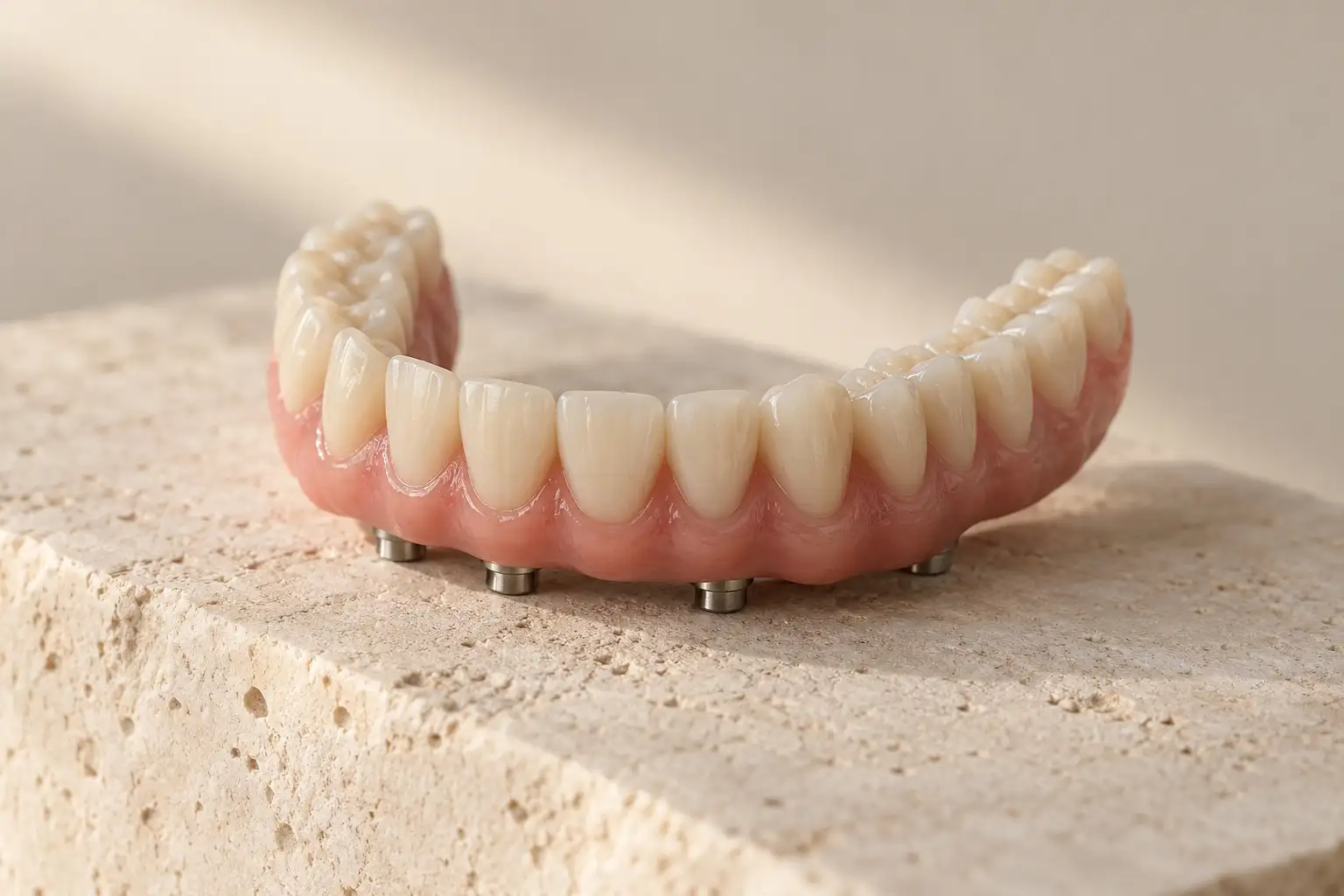
The final teeth usually take a while to make, and that is why your dentist may give you a temporary crown, bridge or prosthesis so you can eat and speak normally in the meantime. During healing, they may also recommend soft foods, cold foods or warm soups.
What care matters between one trip and the next?
Surgical procedures require follow-up. The ADA notes that after dental surgery, bleeding, pain, swelling or infection can occur, and that continuity of care is important. In practice:
- Follow the instructions your dentist gives you about hygiene and eating.
- Avoid tobacco: it can slow healing.
- Let us know if you notice bleeding that does not stop, growing pain, swelling or signs of infection.
- Schedule a check-up with a dentist in your own city; the ADA recommends arranging follow-up care before traveling.
- Ask for your clinical records to be transferred between the office here and the one in your city, with your authorization.
What is worth bringing to the first assessment?
The more information you bring, the clearer the plan will be. Consider bringing:
- X-rays or earlier studies, if you have them.
- A list of your medications and your health conditions.
- Contact details for your regular dentist, to coordinate follow-up.
- Your possible travel dates, so the plan fits your schedule without rushing the healing.
Your general health weighs more than your age in this decision. Chronic conditions such as diabetes can interfere with healing, and that is why your dentist may ask you for a medical evaluation before surgery.
When to see us
- A tooth is missing and you want to know whether an implant is an option for you.
- You live outside Playa del Carmen and want to plan your visits ahead of time.
- You already have an implant in process and notice pain, swelling or movement.
- You have a chronic condition or you smoke and want to know how it matters.
In Dental Implants we evaluate your case before proposing a treatment; you can also see the page on dental implants in Playa del Carmen and the one on dental tourism in Mexico. To organize your stay, read Dental Treatment During Your Trip.