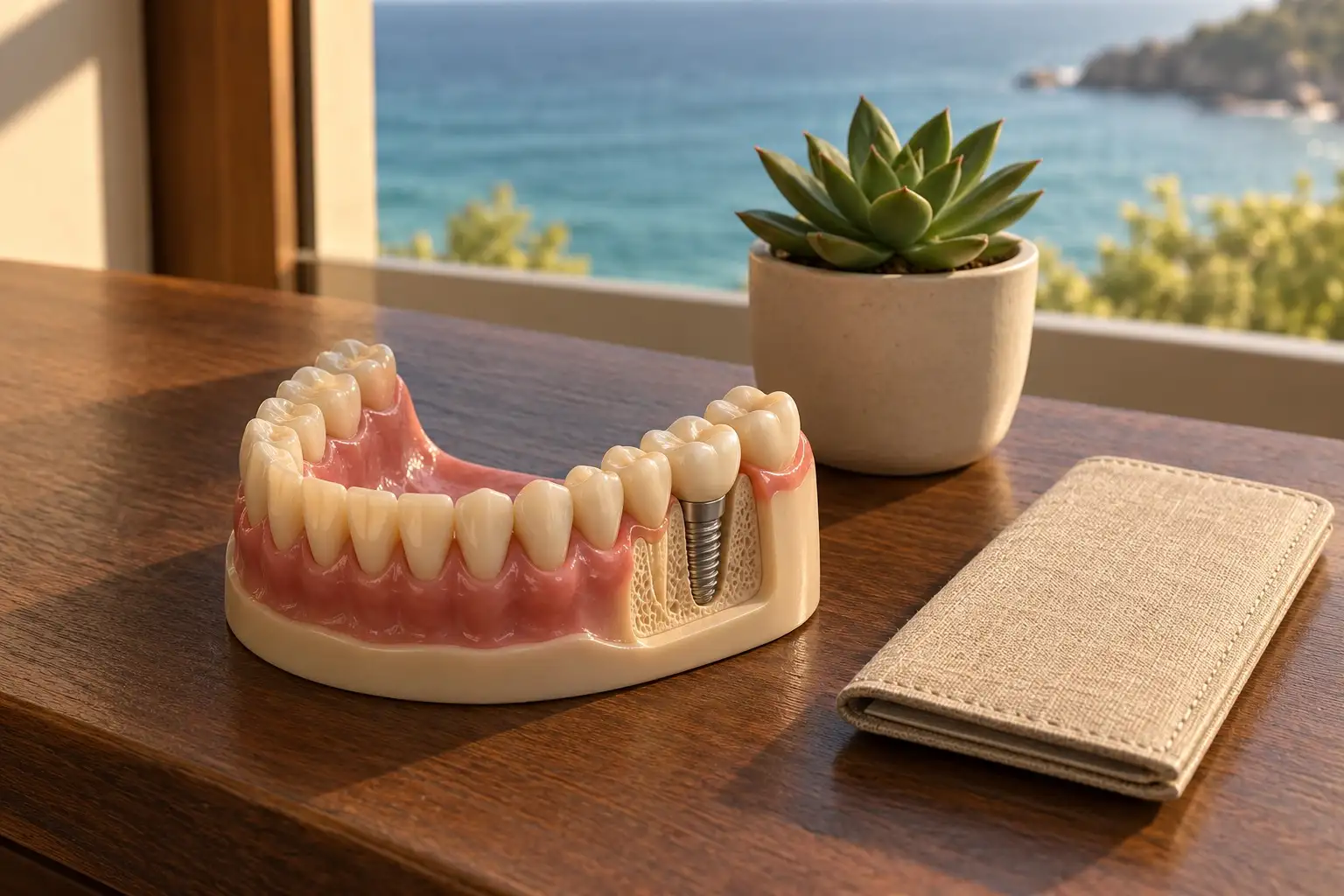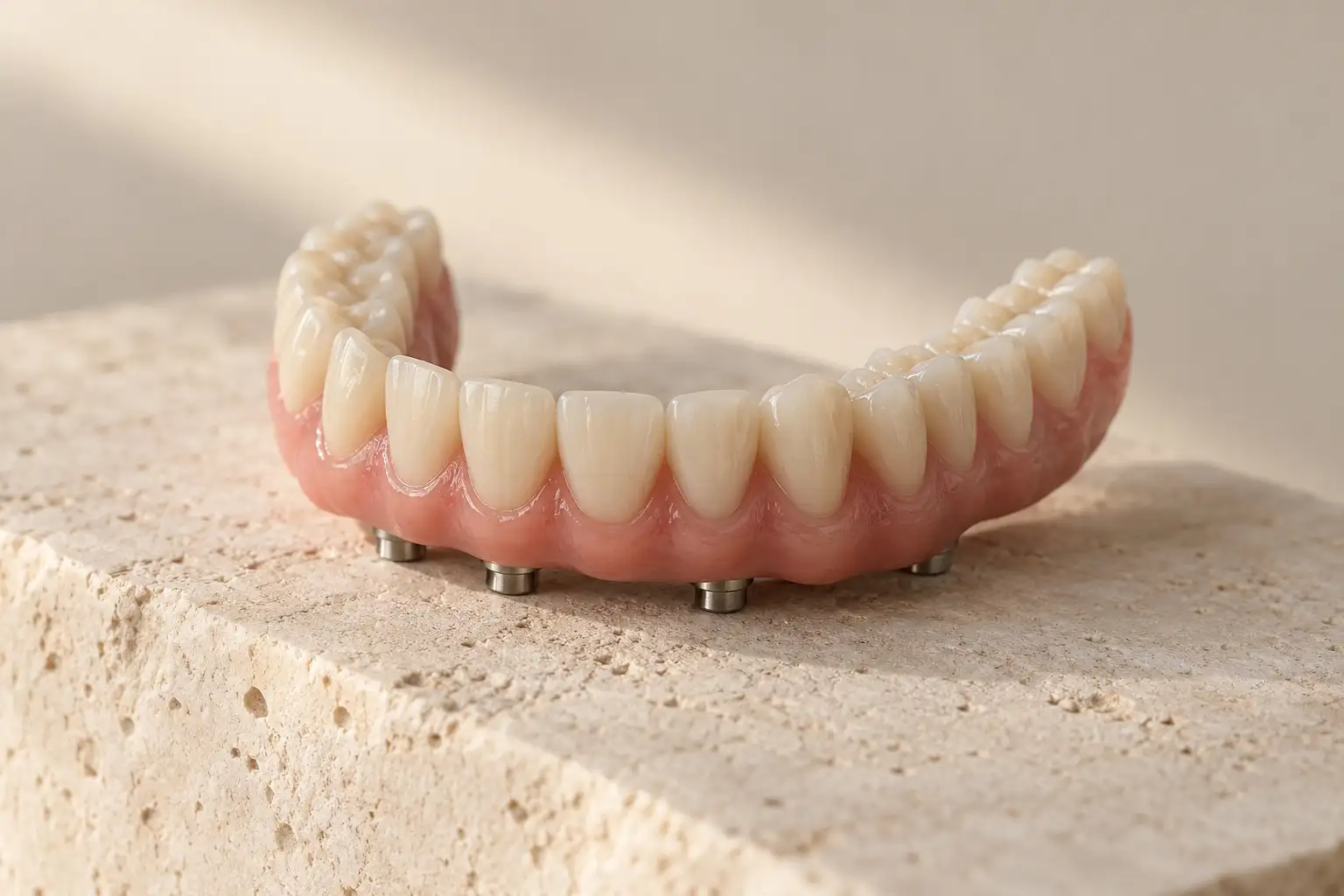


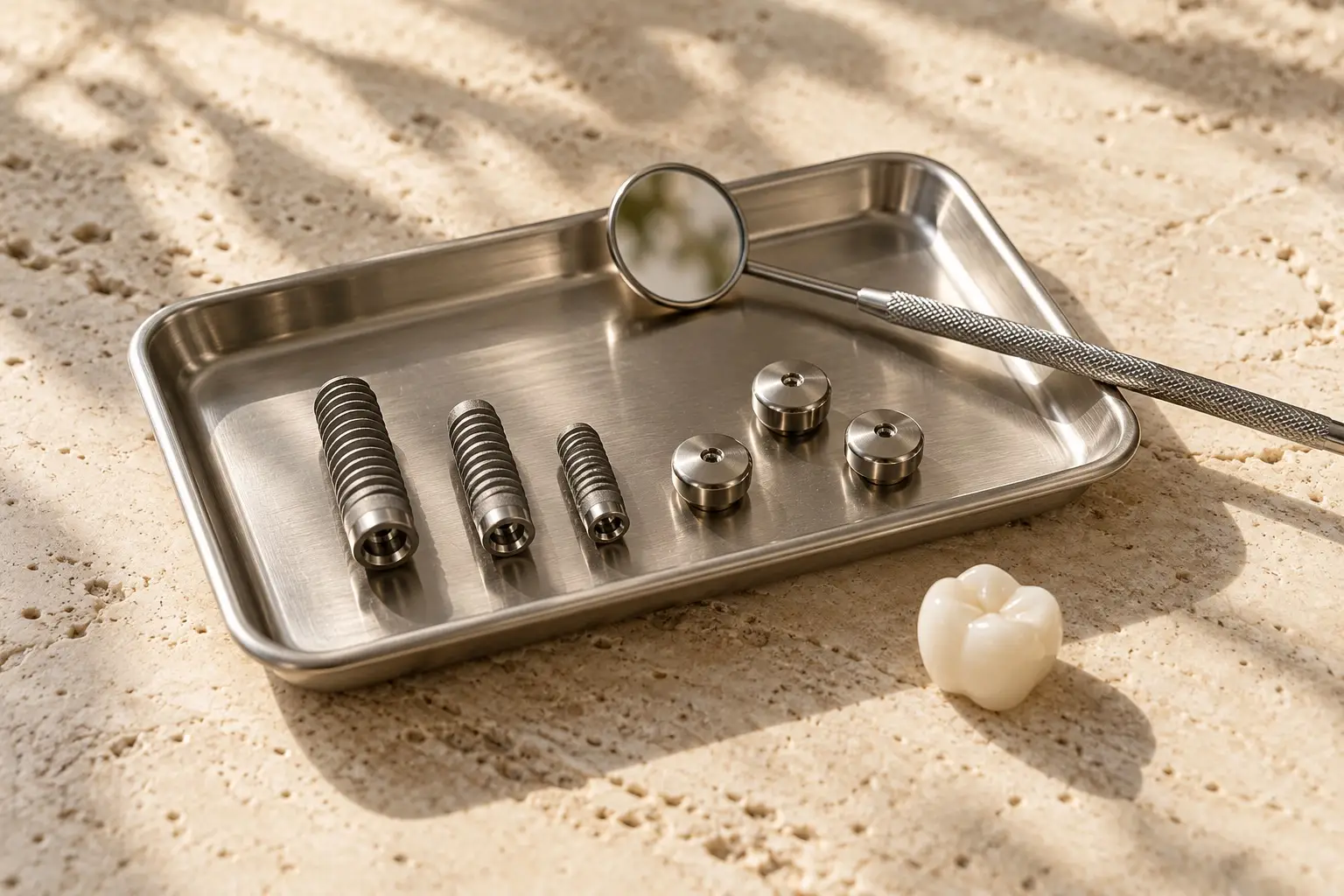
Many ideas circulate about dental implants: that the body rejects them, that they hurt a lot, that once they are in you no longer need to do anything. Some have a grain of truth and others do not. Below, we go over what the evidence says, so you arrive at your assessment with clear questions.
In brief
- Implants are made of titanium and other materials compatible with the body, and in systematic reviews most are still in the mouth at ten years.
- Pain is managed with local anesthesia during the procedure and, if needed, with pain relievers afterward; your dentist defines this based on your case.
- The gums and bone around the implant can become inflamed: hygiene and regular checkups count as much as the surgery.
- That an implant will never wear out is not a promise that can be made: it depends on your health, your habits and how it is cared for.
Is it true that the body rejects implants?
In general, no, although it is not a risk that disappears entirely. The ADA explains that implants are made of titanium and other materials compatible with the body, and that bone grows around the implant and holds it in place, a process called osseointegration. A systematic review of studies with ten years of follow-up found that the great majority of implants were still in the mouth at that point.
What does matter is your health and your habits. The ADA notes that chronic diseases such as diabetes can interfere with healing and that tobacco slows it down. That is why your general health is assessed before an implant is proposed, and age on its own weighs less than your health.
Do implants hurt a lot?
Placement is done with local anesthesia, which is used to prevent pain in one area of the mouth by blocking the nerves that carry it. Afterward there may be some discomfort, as with any oral surgery. The ADA explains that, depending on the procedure, a pain reliever may be needed and your dentist will tell you which one. It also usually recommends soft foods, cold foods or warm soup during healing.
If fear or anxiety worry you, say so at the visit: your dentist can talk with you about dental sedation options and about what makes the visit more comfortable.
Does an implant never wear out?
That cannot be assured. A systematic review on ten-year survival estimated that the great majority of implants remain in the mouth, but when adjusted for the people who stopped attending checkups, the figure drops a little. It also suggested that from age 65 onward, the risk of losing an implant might be higher.
A more recent study, in people with implants that were many years old, reached a similar idea: survival remained high, but many people had inflammation around their implants. Your implant can stay with you for many years, but it is not something you install and forget.
Does an implant need no care?
It does need care. The gums and bone surrounding the implant can become inflamed. When the inflammation damages the bone, it is called peri-implantitis. In that study, maintenance checkups more than twice a year were associated with less peri-implantitis, and having had periodontitis or having the implant for ten years or more was associated with more.
A systematic review on maintenance concluded that placing the implant is not enough and that a program of checkups is advisable, with a minimum suggested interval of every five to six months, adjusted to your risk. Even so, complications can appear, which is why they are monitored.
At home, the basics: careful brushing, cleaning between the teeth and implants with what your dentist recommends, and not smoking.
Can everyone get an implant?
Not everyone. According to the ADA, conditions such as diabetes or leukemia can affect healing, and people who have them may not be good candidates. That is why your general health is evaluated and, sometimes, your doctor is consulted before surgery. For the phases of the process, read Dental implants on your trip.
When to see us
- Bleeding, swelling or a bad taste around an implant.
- Pain that increases instead of easing after surgery.
- An implant or its crown that moves.
- Questions about whether an implant is right for you, especially if you have diabetes, smoke or have had gum disease.
At Nümia, we assess your case before proposing a treatment. Learn about Dental implants and our page on dental implants in Playa del Carmen.