

If you get treated in Playa del Carmen and live in another city or country, sooner or later the question comes up: when can I get on the flight home? There is no single answer, because it depends on the procedure and on how your case evolves. Below, we explain what happens with pressure on a flight and what is worth asking before you book.
In brief
- On a flight, pressure changes, especially at takeoff and landing, and air trapped in closed spaces of the body expands or contracts.
- Tooth pain from pressure changes is called barodontalgia, and it is usually linked to an existing problem in the tooth.
- The sources we reviewed do not give a time frame, in days or hours, for flying after an extraction, an implant or a root canal.
- Your dentist will tell you when it is wise to fly, based on your procedure. Ask before you buy the ticket.
What happens with pressure on a flight?
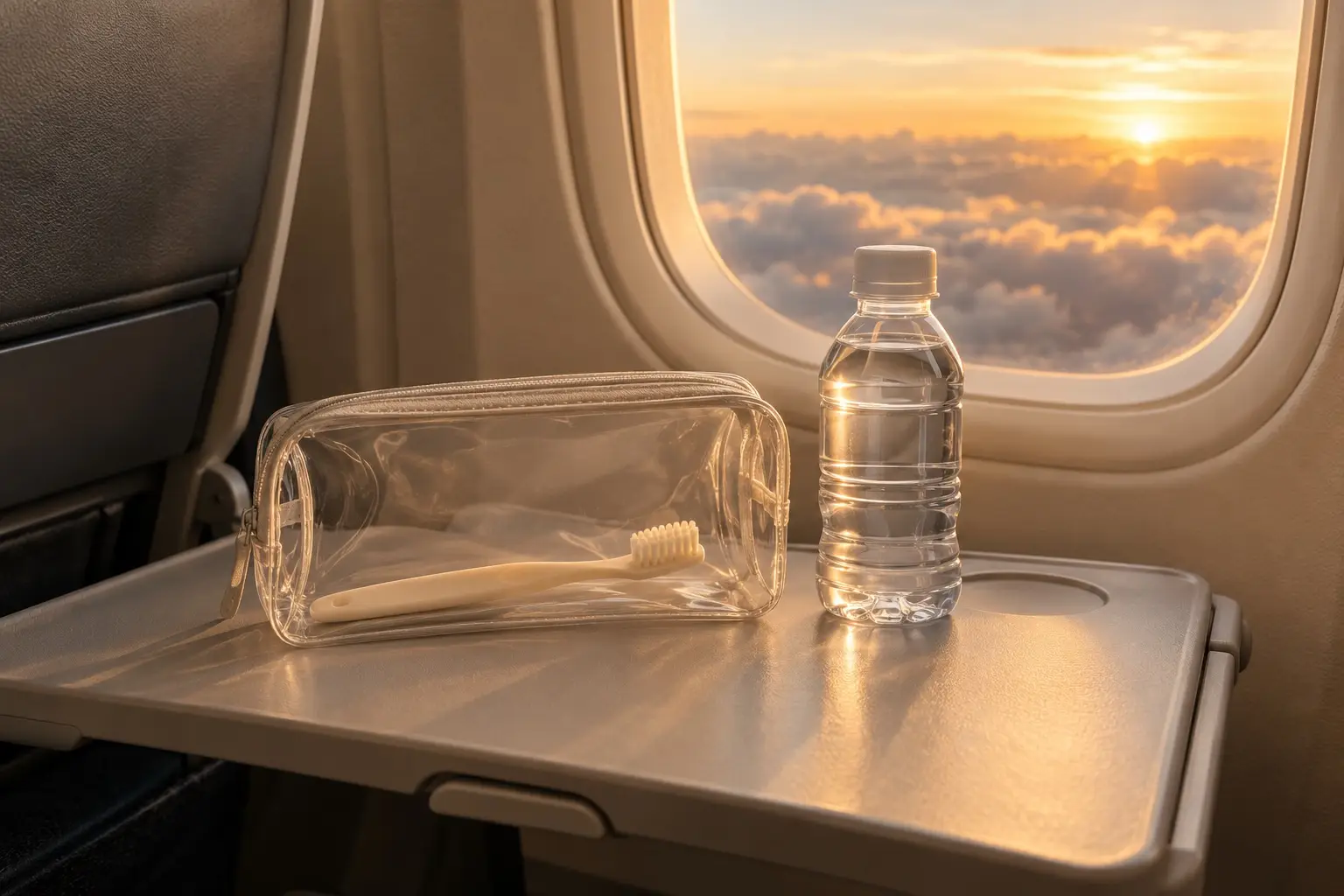
An airplane cabin is pressurized, but not to sea-level pressure, and pressure changes during the flight. A study of pilots published in PeerJ explains that, with pressure changes at altitude, the gas inside the body’s cavities expands, and that this can cause tooth pain. It is the same thing you feel in your ears at takeoff or landing: an air-filled space that does not equalize with the cabin pressure.
Can a tooth hurt when you fly?
Yes, although it is uncommon. Barodontalgia is tooth pain caused by pressure changes. A case report with a literature review, published in Case Reports in Dentistry, considers it uncommon among flight crews, passengers and divers, and describes it as a symptom of another condition, not a disease on its own. The most common causes are inflammation of the pulp (the inside of the tooth), faulty fillings or deep cavities, and problems at the tip of the root. The pain can appear on the way up or on the way down, and sometimes continues after the pressure equalizes.
In addition, a sinus infection or pressure in the maxillary sinus can be mistaken for pain in the upper back teeth. That is why it is a good idea to have your dentist examine you before you fly.
Can you fly after an extraction?
It depends on your case and on how healing is going. The sources we consulted do not set a time frame for flying after a tooth is removed. What MedlinePlus does describe is that the severe pain of a dry socket (when the blood clot is lost) usually appears 1 to 3 days after the extraction, and that you should call your dentist if you notice it.
For that reason, before you book your return, ask when your dentist will check your healing and whom to call if something changes during the trip.
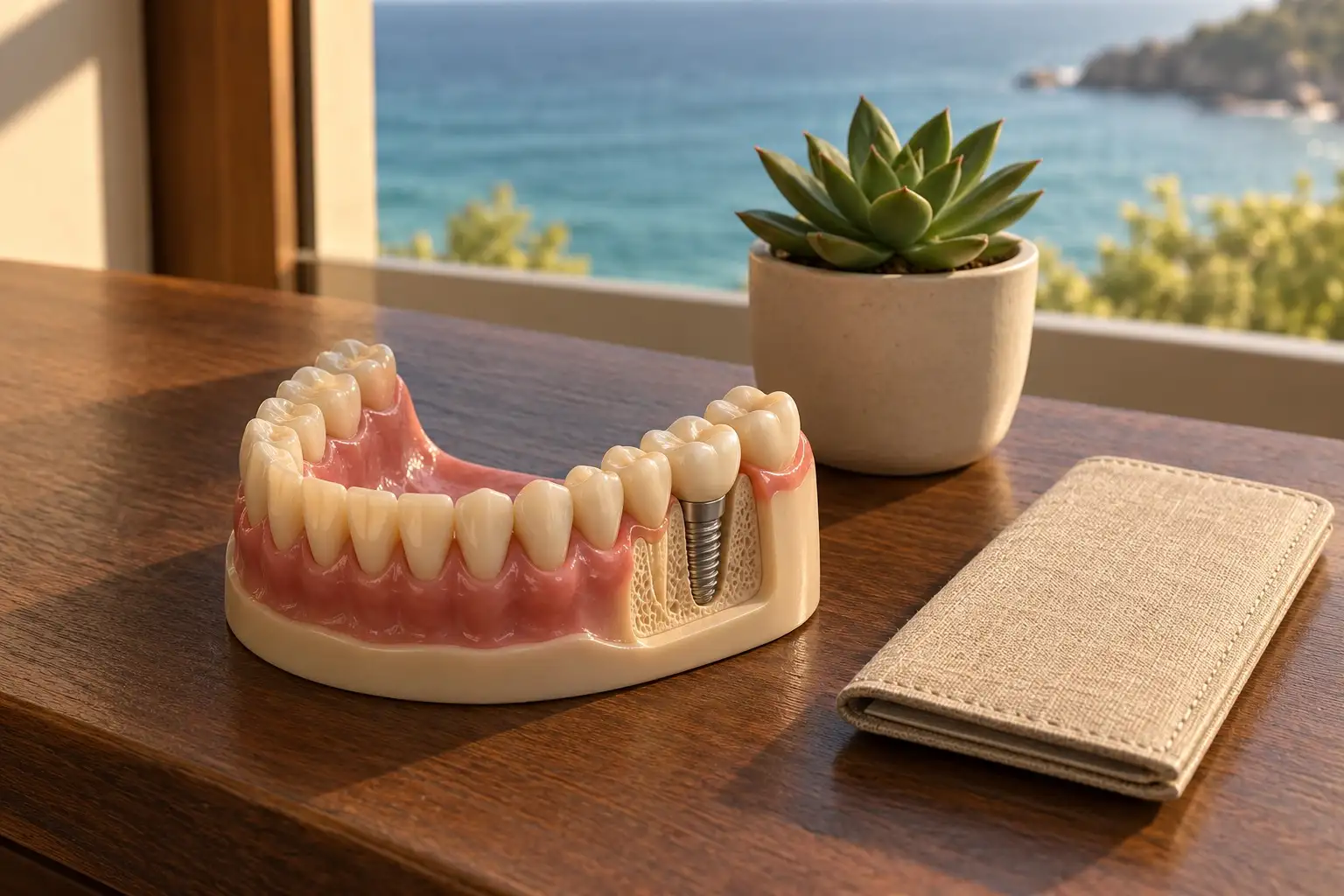
And after an implant?
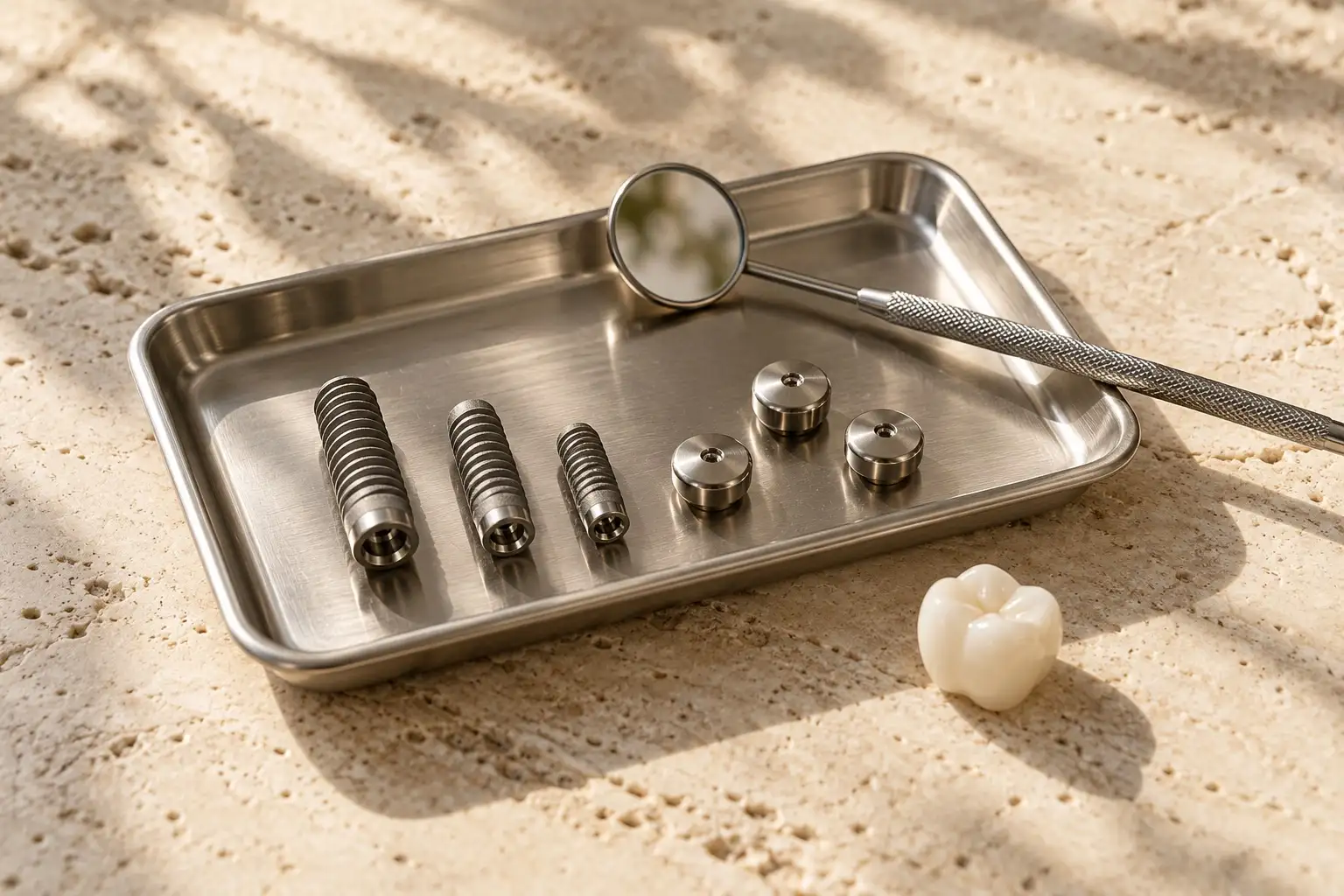
We did not find a time frame in the sources for flying after an implant is placed, either. If the procedure was in the upper part of the mouth, near the maxillary sinus, ask specifically about flights and about any care related to pressure. For the phases and timing of an implant, we recommend Dental implants on your trip.
And with a root canal?
If the root canal treatment is still in progress, or if the tooth had an infection at the root, it is wise to resolve it before exposing yourself to pressure changes. The Case Reports in Dentistry article recommends avoiding pressure changes until pending procedures are finished, and its case report, a tooth with a lesion at the root, only improved with root canal treatment. A study of pilots in PeerJ mentions that temporarily restricting flying after dental treatment helps prevent barodontalgia, although it does not specify for how long.
What should you ask, and what should you bring on your trip?
Before you book the return flight, ask:
- Is it wise for me to fly with my procedure, and when will I know for sure?
- Which symptoms are normal, and which call for a phone call?
- Do I have any pending treatment that should be finished before I travel?
And bring written instructions, the clinic’s contact details and the details of a dentist you trust in your city. If you can, leave some room in your calendar to adjust your flight date.
When to see us
- Pain that increases, bleeding that does not stop or swelling after the procedure.
- A bad taste or bad breath that gets worse.
- Tooth pain at takeoff or landing on a previous flight.
- Questions about whether your flight date is suitable.
At Nümia, we assess your case before proposing a treatment, and we help you plan calmly. Learn about Oral surgery and read more about dental tourism in Playa del Carmen.