

Many people clench or grind their teeth without knowing it. It happens mostly at night, while they sleep, and the one who notices first is usually their dentist, on seeing the wear, or the person who sleeps next to them, on hearing the noise. This habit is called bruxism and, although it does not always cause discomfort, over time it can damage the teeth. At Nümia we tell you which signs to look for, how it relates to stress and when it is worth having it checked.
What bruxism is
Bruxism is the habit of clenching or grinding the teeth involuntarily. It can happen at night, during sleep, or during the day, often while you concentrate, drive or are under pressure. Clenching your teeth now and then is normal; the problem appears when the force is intense or constant and the teeth, the muscles and the jaw joint begin to feel it.
Common signs
Some signs that may point to bruxism:
- Wear on the edges of the teeth, which look flatter or shorter.
- Sensitivity to cold because of worn enamel.
- Pain or tiredness in the jaw on waking.
- A headache in the morning, especially at the temples.
- Restorations or teeth that chip or break.
- Someone tells you that you grind your teeth in your sleep.
The link with stress
Stress is one of the factors most associated with bruxism, but not the only one. Sleep quality, some medications, caffeine or alcohol and, in certain cases, the way the teeth come together also play a part. That is why there is no single solution for everyone.
If, besides clenching your teeth, you snore, wake up tired or feel you do not rest even when you sleep several hours, mention it to your doctor as well: bruxism sometimes goes together with sleep disorders that are worth assessing.
What we do at the appointment
In the dental office we check the wear on your teeth, the condition of your restorations, the muscles of your jaw and the way you bite. With that we can confirm whether there is bruxism and how much it is affecting you.
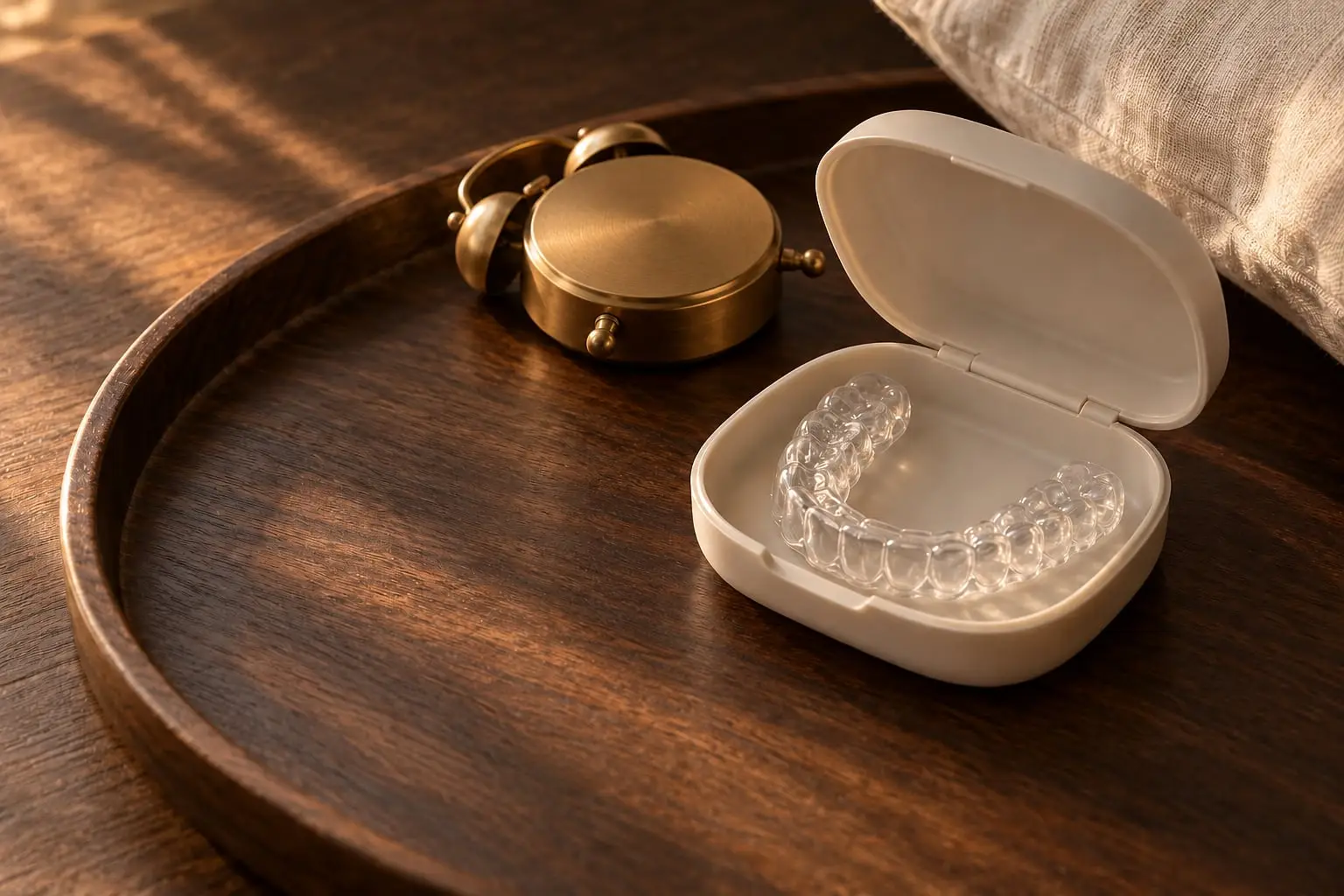
One of the most useful tools is the occlusal splint: a custom-made guard, made in our laboratory, that you wear while sleeping. The splint does not eliminate the habit, but it protects your teeth from wear and spreads the force so that the muscles and the joint work under less load. We follow up to adjust it and check how your teeth respond. If there are worn or broken teeth, we also plan how to restore them.
When the wear is significant, we explain which restorations can give your teeth their shape back and in what order it makes sense to do them, always after protecting the bite with the splint.
Habits that help
Besides the splint, there are simple habits that can help. None of them replaces the assessment, but together they help the jaw rest:
- Notice when you clench during the day. Many people do it in front of the computer or while driving; realizing it is the first step.
- Lips together, teeth apart. It is the resting position of the jaw; repeat it as a reminder during the day.
- Less caffeine in the afternoon and a quiet moment before going to sleep.
- Breathe calmly. The slow breathing we suggest in the Ritual Nümia, inhale, hold and let go slowly, helps lower tension in the jaw.
When to see us
We recommend booking an assessment if:
- You notice wear or your teeth chip.
- Your jaw or head hurts when you wake up.
- Someone has heard you grind your teeth at night.
- Restorations break on you often.
At General dentistry we review your case and propose how to protect your teeth.