

A child’s first dental visit is much more than a check-up: it is the moment their idea of what going to the dentist means takes shape. If that experience is calm, the next ones usually are too. At Nümia we tell you when it makes sense to schedule it, how to prepare at home and what happens at the appointment.
When to schedule the first visit
In pediatric dentistry, it is recommended that the first visit happens when the first tooth comes in or around a child’s first birthday. It may seem early, but it makes sense: at that visit we check how the teeth are forming, spot any early stain or cavity in good time and, above all, guide the family on habits and care.
If you notice something earlier, such as stains on the teeth, swollen gums or a blow to the mouth, do not wait for that age: bring your child in for a check as soon as you notice it.
How to prepare at home
The way we talk about the visit has a big influence on how your child experiences it. Some ideas that help:
- Use simple, calm words. Tell them we are going to look at their teeth and count them.
- Avoid promises like “it won’t hurt.” Even though the intention is good, it plants the idea of pain.
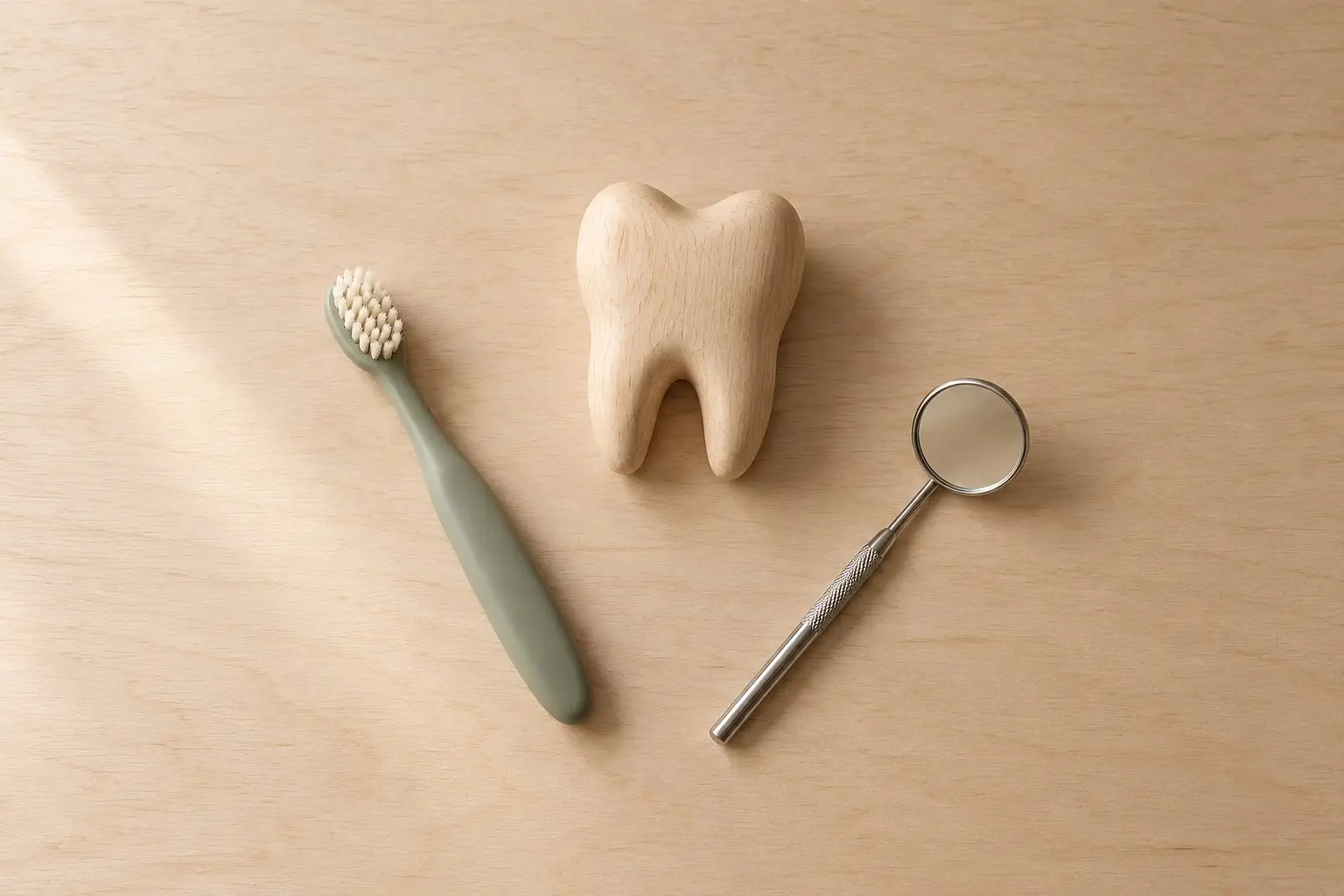
- Play dentist at home. Counting the teeth of a stuffed animal, or their own in front of the mirror, makes the check-up feel familiar.
- Choose a good time of day. A time when they are neither sleepy nor hungry makes everything easier.
- Mind your own tone. If going to the dentist makes you nervous, try not to pass it on; children notice.
What happens at the appointment
The first visit goes at their pace. First we let your child get to know the dental office and the chair, and see up close what we are going to use. Then we check their teeth and gums; if they are very small, we often do it with your child sitting on your lap.
We also talk with you about the habits that affect their mouth, such as the pacifier, the bottle at night or thumb sucking, and we explain how to brush their teeth and whether it makes sense to apply fluoride at their age. Throughout the visit, their adult is by their side. If one day they do not want to open their mouth, that is fine: we try again calmly or at another appointment.
Baby teeth do matter
Sometimes people think that since baby teeth will fall out, they do not need much care. That is not so. Baby teeth hold the space for the permanent ones, help with chewing well and learning to speak, and are part of your child’s smile and confidence. They can also get cavities, and a cavity in a baby tooth can hurt, become infected and affect the permanent tooth coming in underneath.
At home, afterwards
After the first visit, daily care matters most:
- Brush their teeth twice a day and supervise the brushing until they have the skill to do it well.
- Use the amount of toothpaste that matches their age: a grain of rice for the youngest and a pea a little later, according to what we tell you at the appointment.
- Do not let them fall asleep with a bottle of milk or juice.
- Limit sweets and sugary drinks between meals.
The following visits, at the frequency we recommend, help the check-up become part of their routine and not an event to be afraid of.
When to see us
We recommend booking a visit if:
- You notice white or brown spots on their teeth.
- They have pain, swollen gums or took a blow to a tooth.
- They have not had their first check-up yet.
Pediatric dentistry is one of Nümia’s nine specialties. We look forward to seeing you at the dental office so that their first visit is a calm one.